

Many people go through life dealing with recurring dental troubles that happen one tooth at a time. A chipped premolar, a broken filling, or persistent jaw pain that never completely disappears can gradually wear down oral health. When multiple dental problems overlap, fixing an isolated tooth often feels like putting a small bandage on a much larger issue. Over decades, this reactive approach leaves patients with mismatched restorations, an uneven bite, and worsening discomfort. This is where full-mouth reconstruction enters the picture. It is not a single cosmetic touch-up or a standard cleaning routine. Instead, it represents a complete, systematic overhaul designed to rebuild oral health from the ground up.
When patients step into an experienced dental office, they often carry years of frustration from dealing with chewing pain, shifting teeth, and worn enamel. Full-mouth rehabilitation recognizes that the mouth works as a single, connected biological system. The teeth, jaw joints, chewing muscles, and gum tissues all depend on one another to function smoothly. If one component falls out of balance, the rest of the mouth compensates, often leading to uneven wear, cracked enamel, and chronic discomfort. Bringing these components back into harmony requires a broad, tailored restorative dentistry service that evaluates how every tooth works in motion. The overall goal is to restore chewing power, establish lasting comfort, and create a balanced smile that looks completely natural.
Comprehensive Diagnostics and Digital Smile Evaluation
Every successful medical or dental project begins with an accurate diagnosis, and full-mouth rehabilitation is no exception. A clinician cannot fix a complex problem without understanding the underlying causes of tooth breakdown. For instance, acid reflux, untreated sleep apnea, chronic nighttime teeth grinding, and old trauma can all produce significant damage over the decades. Clinicians must uncover these root drivers so that newly restored teeth do not suffer the exact same fate as the original ones.
During an initial dental appointment, the clinical team gathers an extensive collection of diagnostic information. Advanced three-dimensional cone beam imaging scans bone density, nerve pathways, and the orientation of the jaw joints. High-resolution intraoral cameras capture minute cracks and margins around aged restorations that traditional mirrors might miss. Digital impressions replace uncomfortable impression trays, mapping out the upper and lower arches with extreme precision. Clinicians also record how the patient speaks, how the lips frame the teeth during resting posture, and how the jaw moves while biting. These functional measurements reveal whether the chewing muscles are under chronic strain or working comfortably. This objective virtual mapping gives patients a realistic visualization of their expected treatment outcome before clinical procedures commence. All of these diagnostic data points feed into virtual planning software, giving the dental team a clear starting canvas to map out every phase before touching a single tooth.
Periodontal Health and Foundations First
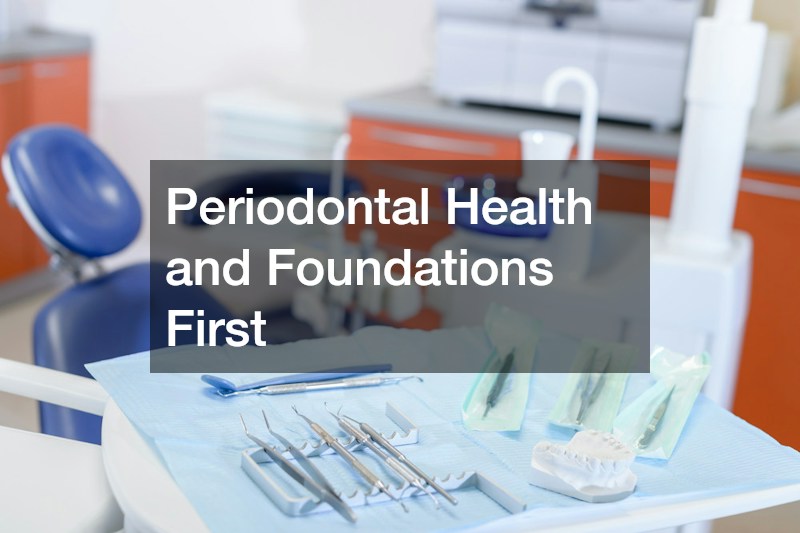
A house built on unstable soil will eventually tilt or crack, no matter how beautiful the architectural design might be. The same principle applies directly to human dentition. Before placing any permanent restorations, the surrounding periodontal tissues and alveolar bone must be completely healthy and stable. Gingival inflammation, active bacterial infection, and bleeding gums undermine the longevity of dental work. If periodontal disease remains active, bone loss will continue unchecked, eventually causing even the most durable restorative materials to loosen and fail.
Periodontal therapy often serves as the vital first clinical step in rebuilding a mouth. Hygienists and periodontists work to remove hardened tartar, calculus, and bacterial biofilms from deep below the gumline through deep scaling and root planing. In cases where chronic infection has created deep periodontal pockets, minor surgical treatments or localized antimicrobial therapies may be required to eliminate pathogens. Patients also receive customized daily cleaning protocols to maintain healthy gum tissue at home. Consistent home hygiene combined with in-office care allows inflamed tissues to firm up and heal. Healthy gums form a secure barrier that shields deeper jaw structures from destructive microbes. Only when the gingival tissues are firm, pink, and free of bleeding can the restorative team move forward with lasting structural work.
Addressing Severe Decay and Irreversible Structural Loss
Once the periodontal foundation shows reliable health, clinicians turn their attention to individual teeth that are actively infected, fractured, or decayed. The clinical team evaluates each tooth to determine its realistic long-term prognosis. Whenever feasible, saving natural tooth structure is always the preferred route. Endodontic treatment, commonly known as root canal therapy, can remove damaged nerve tissue and relieve lingering infection while keeping the natural tooth root anchored safely in the jawbone. Removing internal infection stabilizes the tooth, eliminating chronic tenderness and allowing the root to support a new crown.
However, there are moments when a tooth has suffered too much damage from deep fractures, root resorption, or extensive decay below the gumline. In these situations, holding onto a severely compromised tooth poses ongoing risks to the surrounding bone and adjacent teeth. A planned tooth extraction becomes the safest and most predictable choice to protect overall oral health. Performing extractions early in the treatment timeline prevents recurring infections and allows the surrounding jawbone to heal properly. Often, clinicians place bone grafting material directly into the socket during the extraction procedure, preserving essential bone volume and contour for future replacement therapies.
Harmonizing the Bite and Jaw Alignment
One of the most frequent causes of widespread dental destruction is a misaligned bite. When upper and lower teeth do not meet evenly, chewing pressures become unbalanced. Certain teeth bear the brunt of thousands of pounds of pressure each day, leading to premature flattening, chipped enamel, and painful jaw strain. Attempting to place new restorations on crooked or misaligned teeth often leads to premature failure because the underlying destructive forces remain active. Correcting the spatial relationship of the teeth is therefore essential before undertaking extensive rebuilding.
In many comprehensive cases, partnering with a knowledgeable orthodontist makes an enormous difference in the final outcome. Straightening the teeth creates sufficient physical space for restorations and lines up the roots at optimal angles within the jawbone. Modern aligner systems such as invisalign offer a discreet, highly predictable way to guide teeth into their correct positions before restorative work begins. By shifting crowded, tilted, or spaced teeth into harmony, the dental team can preserve far more natural enamel later on, since teeth will not need aggressive reshaping simply to appear straight. Proper alignment also relieves tension on the temporomandibular joints, reducing daily headaches, facial tightness, and chronic muscle soreness. Balanced tooth contacts protect restorative materials from excessive friction and fractures.
Structural Rebuilding and Tooth Reinforcement
With the bite properly aligned and gum tissues stabilized, the clinical team can focus on repairing broken, worn, and weakened natural teeth. Years of nighttime clenching, acidic diets, or untreated decay often leave teeth severely shortened. This loss of vertical height causes the lower face to collapse slightly, creating premature aging lines around the lips and chin. Restoring vertical dimension requires rebuilding each tooth to its anatomical height, restoring lip support, and returning the jaw to a relaxed, natural resting posture.
Custom dental crowns play an indispensable role throughout this stage of treatment. Unlike simple surface fillings, crowns completely encircle the remaining tooth structure above the gumline, distributing chewing forces evenly and preventing further structural fractures. Modern all-ceramic materials, such as monolithic zirconia and lithium disilicate, deliver remarkable compressive strength alongside lifelike translucency that mimics natural enamel. Integrating these restorations as part of a structured restorative dentistry service ensures that every single tooth is rebuilt with meticulous attention to detail. Clinicians make certain that the biting surfaces interlock smoothly, allowing the patient to chew tough foods with total confidence and zero discomfort.
Modern Solutions for Replacing Missing Teeth
Missing teeth present substantial obstacles to both nutrition and oral balance. When even a single tooth goes missing, neighboring teeth gradually tip into the vacant space, while opposing teeth drift outward from their sockets. Over several years, this uncontrolled shifting disrupts bite mechanics, accelerates gum recession, and promotes localized bone loss. Chewing efficiency drops, forcing individuals to avoid nutrient-rich whole foods. Replacing missing teeth promptly is essential for stabilizing the dental arch and preventing progressive structural collapse.
The gold standard for tooth replacement in modern dentistry is the dental implant. Rather than relying on adjacent natural teeth for support, an implant consists of a biocompatible titanium post that fuses directly with the patient’s jawbone through osseointegration. This artificial root replicates natural stimulation, stopping the jawbone from shrinking away over time and maintaining natural facial fullness. Whether replacing an isolated tooth with an individual porcelain crown or supporting a full fixed bridge across an entire arch, implants deliver rock-solid stability. Patients regain the ability to bite into crisp apples, chew steak, and speak clearly without worrying about slipping prosthetics or uncomfortable friction against the gums. This secure foundation replicates the feel and strength of natural roots.
The Intersection of Functionality and Smile Aesthetics
While restoring chewing ability and stabilizing jaw mechanics remain primary priorities, appearance matters just as much to everyday quality of life. A smile that feels physically comfortable but looks uneven, discolored, or artificial can leave a person feeling hesitant to laugh or speak openly in social settings. Full-mouth reconstruction intentionally unites mechanical precision with visual artistry, creating an outcome where lifelike beauty arises naturally from healthy structural design. Teeth should complement facial features rather than draw unwanted attention.
Achieving this balance is the specialty of an experienced cosmetic dentist. Rather than applying a generic, cookie-cutter look, the clinician assesses skin tone, lip curvature, facial symmetry, and pupil alignment to craft an individualized smile design. For teeth that show mild surface wear, stubborn discoloration, or minor irregularities along the smile line, ultra-thin dental veneers offer an elegant solution. These custom-crafted shells of fine ceramic bond securely to the front enamel, refining tooth proportions and reflecting light just like natural teeth. By selecting porcelain shades and optical translucencies that match the surrounding restorations, the dental team delivers a smile that looks completely authentic and effortless.
Sequencing the Journey and Treatment Phasing
Rebuilding an entire smile does not happen overnight. Because full-mouth reconstruction involves multiple clinical steps, proper sequencing is essential to ensure long-term clinical success and patient comfort. Trying to rush procedures or combine too many aggressive treatments into a single day can overwhelm the mouth’s biological healing capacity. A phased roadmap breaks the comprehensive treatment plan down into clear, manageable stages that fit realistic personal and financial schedules, reducing stress along the way.
During each dental appointment along the journey, clinicians focus on a distinct, planned objective. Initial stages prioritize resolving urgent pain, controlling active decay, and stabilizing gum tissues. Next, transitional provisional restorations give patients an immediate functional preview while the surrounding bone and soft tissues heal completely. This temporary stage allows the dental office team to test bite height, speech patterns, and aesthetic contours before fabricating the final ceramic restorations. If minor phonetic adjustments or bite refinements are needed, they can easily be made in the acrylic temporaries. Phasing care also provides emotional and physical breathing room, turning what might feel like an intimidating endeavor into a predictable, comfortable step-by-step experience.
Preserving Your Investment and Long-Term Oral Health
Completing a full-mouth rehabilitation is a significant personal achievement that restores dental health, chewing confidence, and daily comfort. However, the completion of active treatment marks the beginning of an equally crucial phase: lifelong maintenance. Even the highest-grade ceramic materials and biocompatible posts depend on healthy bone and clean surrounding tissues to survive over several decades. Patients must protect their investment through disciplined daily care and regular preventive evaluations to ensure the longevity of their new bite.
A consistent at-home cleaning routine remains the first line of defense. Daily brushing with non-abrasive fluoridated toothpaste, thorough interdental flossing, and water flossing protect the margins where custom dental crowns meet natural tooth enamel. For individuals with replacement teeth, specialized cleaning around each dental implant prevents peri-implant inflammation and bone loss. Additionally, wearing a custom nightguard protects ceramic surfaces from unexpected grinding pressures during deep sleep. Routine professional cleanings and examinations every six months ensure that minor adjustments can be made promptly, allowing the reconstructed smile to remain vibrant, sturdy, and functional for a lifetime.